Problem
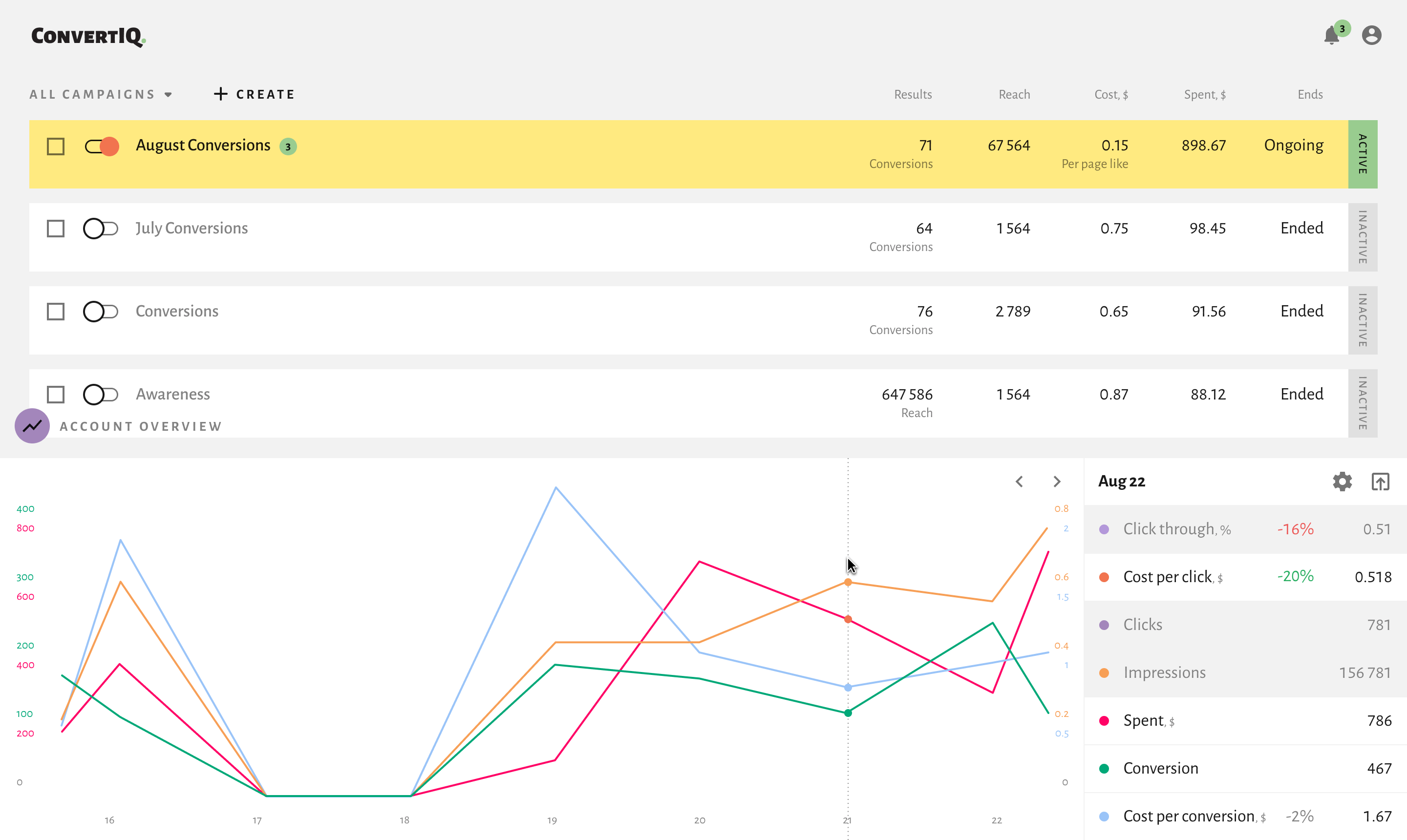
Small business owners know social media is critical for growth. What they lack is time and know-how — the tools they already have are powerful; using them well is a profession in itself.
In practice that means switching between platforms with different formats, metrics and vocabularies, trying to keep the brand voice consistent across all of them, losing hours weekly to mechanical work like resizing assets — and still having no unified view of what actually performs.
Who we designed for

Entrepreneur
Marcus Johnson runs a local home renovation company. Marcus knows social media is critical for growth but lacks the time to manage multiple platforms while overseeing construction projects and meeting with potential customers.

Merchant
Sara owns a flower shop. She needs to showcase her latest creations across multiple platforms to drive seasonal orders. Sara struggles to maintain consistent posting while managing her shop and finds it difficult to track which posts generate actual foot traffic to her store.

Small business owner
Leila operates a candle store. Leila finds herself overwhelmed trying to create original content, respond to community messages, and analyze which promotional strategies actually bring people through the door.
Approach
Literature review
I often start with the literature review—it usually provides a great start in building a conceptual model. Avery Swartz's See You on the Internet and Jason McDonald's Social Media Marketing Workbook were useful in both understanding the basics of the subject and getting the general idea of what users can be facing.
Unconventional research approach
To validate our strategic direction, I used digital ethnography - analyzing YouTube videos1 where small business owners documented their campaign struggles in real-time. Despite some shortcoming2 this proved to be a low-cost and enormously insightful way of getting to know our users:
- People showed actual workflows, not idealized descriptions
- We saw authentic frustration points without researcher influence
- Sample size was larger (50+ videos vs typical 8-12 interviews)
- Captured behavior across different business types and skill levels
This research confirmed our strategy: users wanted guidance over features. They had access to powerful tools (Facebook Ads Manager, etc.) but didn't know how to use them effectively.
Design highlights
Key decisions
Three strategic directions considered
The literature pointed to three distinct approaches to campaign management, each with its own trade-offs:
- 1. Platform-agnostic approach ∙ chosen
- Create campaigns once, adapt automatically for each platform. Prioritizes efficiency over platform-specific optimization.
- 2. Platform-native approach ∙ rejected
- Deep integration with each platform's unique features. Would require separate workflows for each social network.
- 3. Template-first approach ∙ rejected
- Pre-built industry templates (restaurant, retail, services). Faster setup but less flexibility for unique businesses.
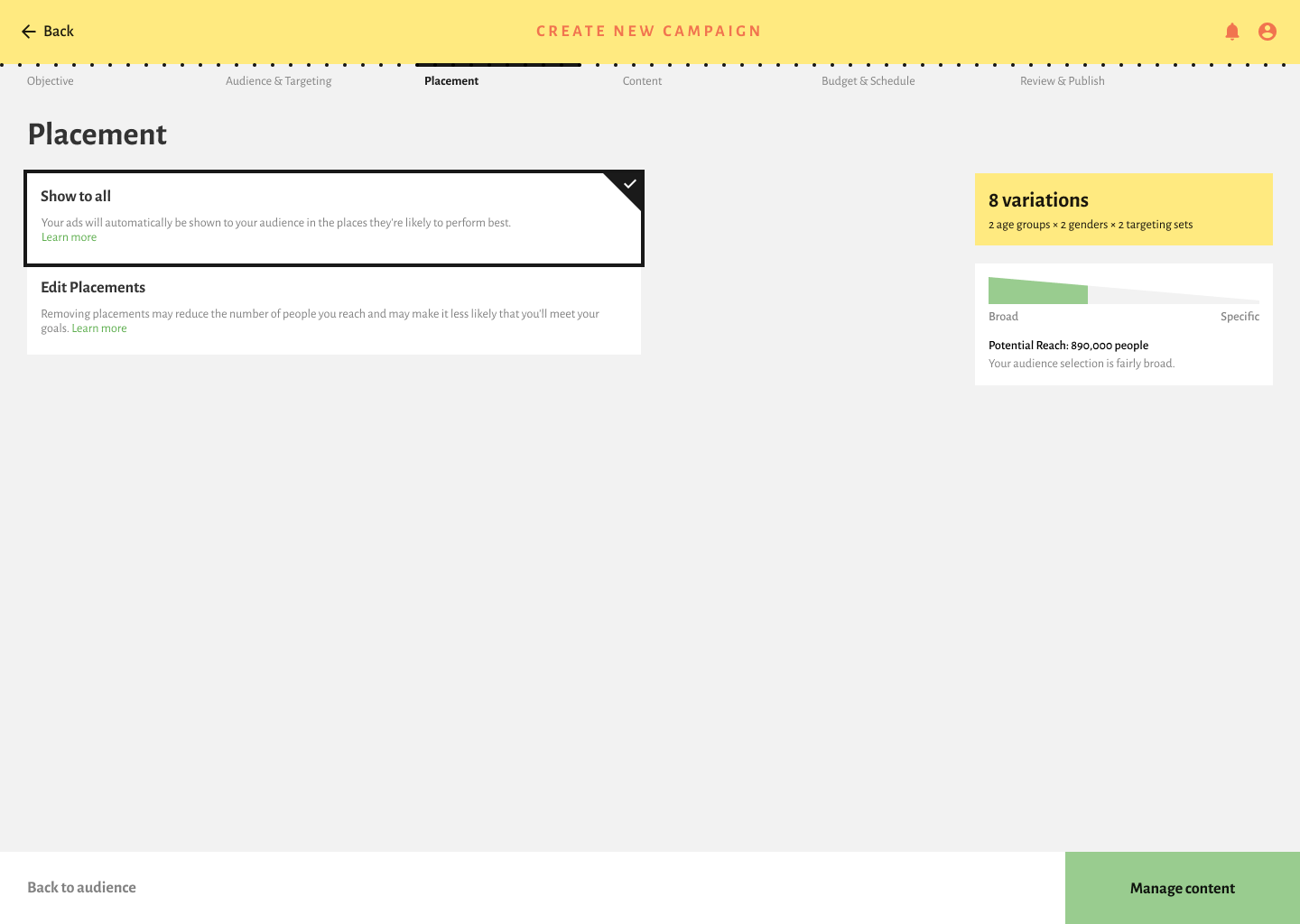
We chose the platform-agnostic approach because our user research revealed that consistency was more valuable than optimization for small business owners who lacked time to learn platform nuances.
Impact
The engagement ended at the initial design and an integration prototype — before the product could be validated in use. The measure here is what the design targets:
Minutes, not afternoons
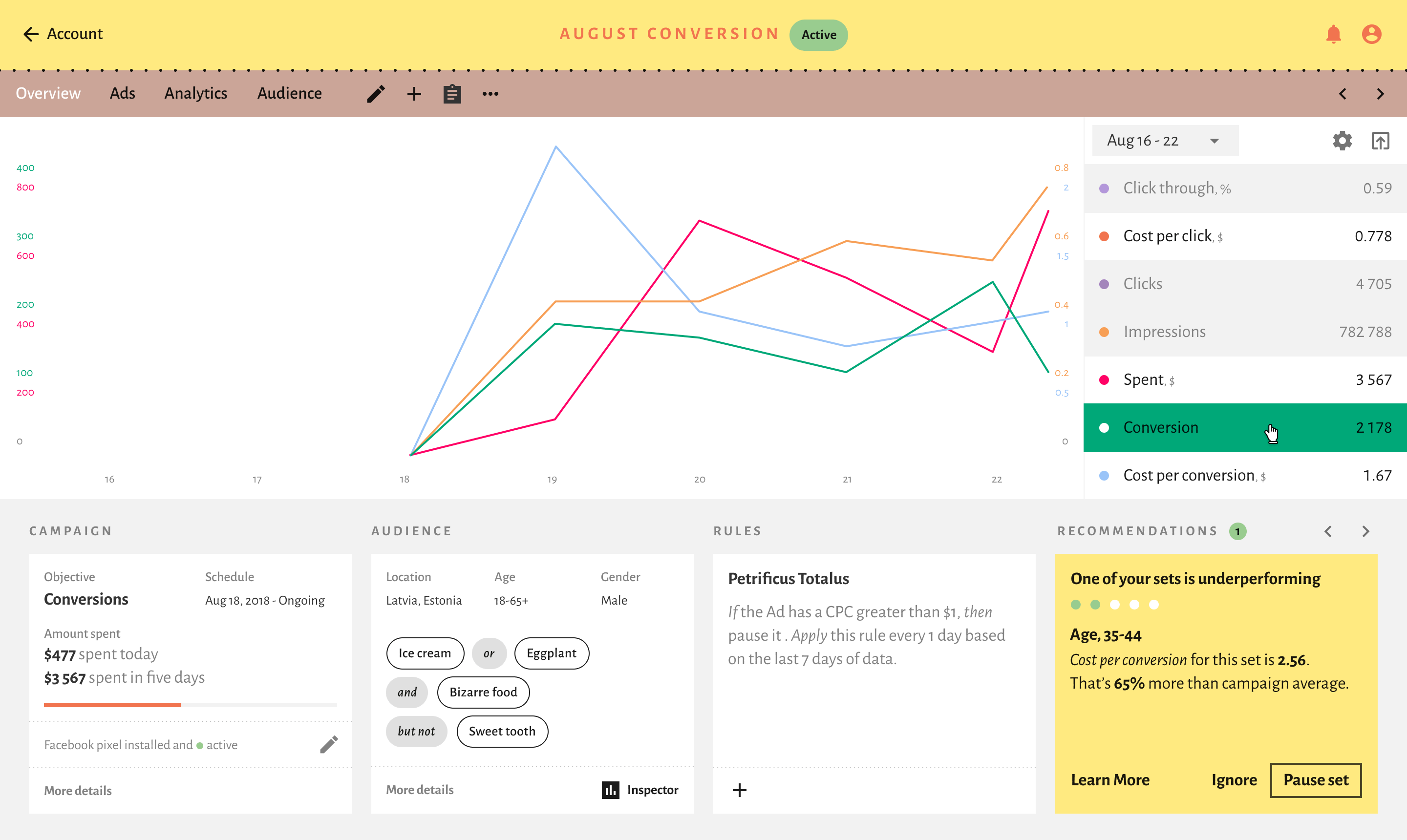
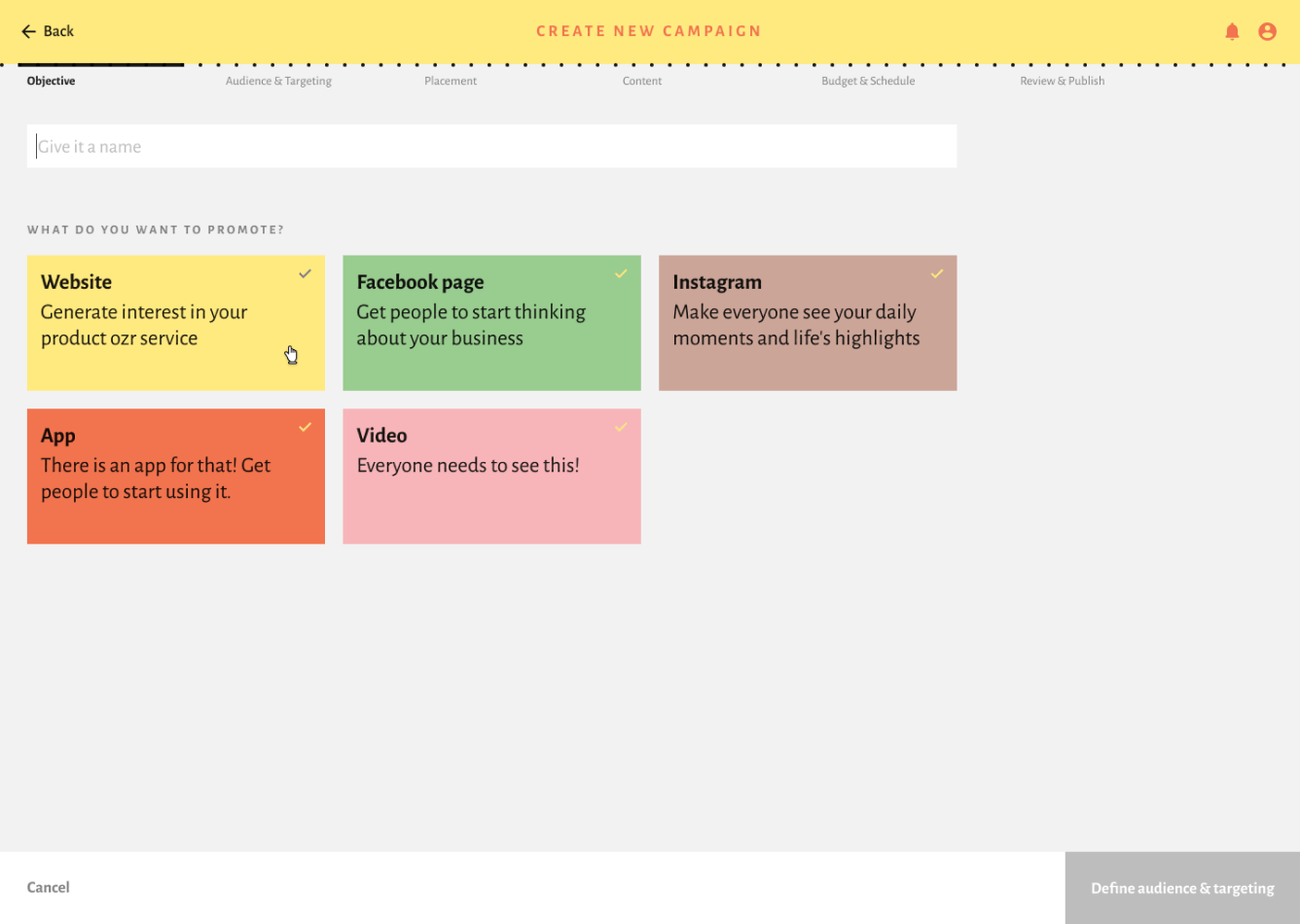
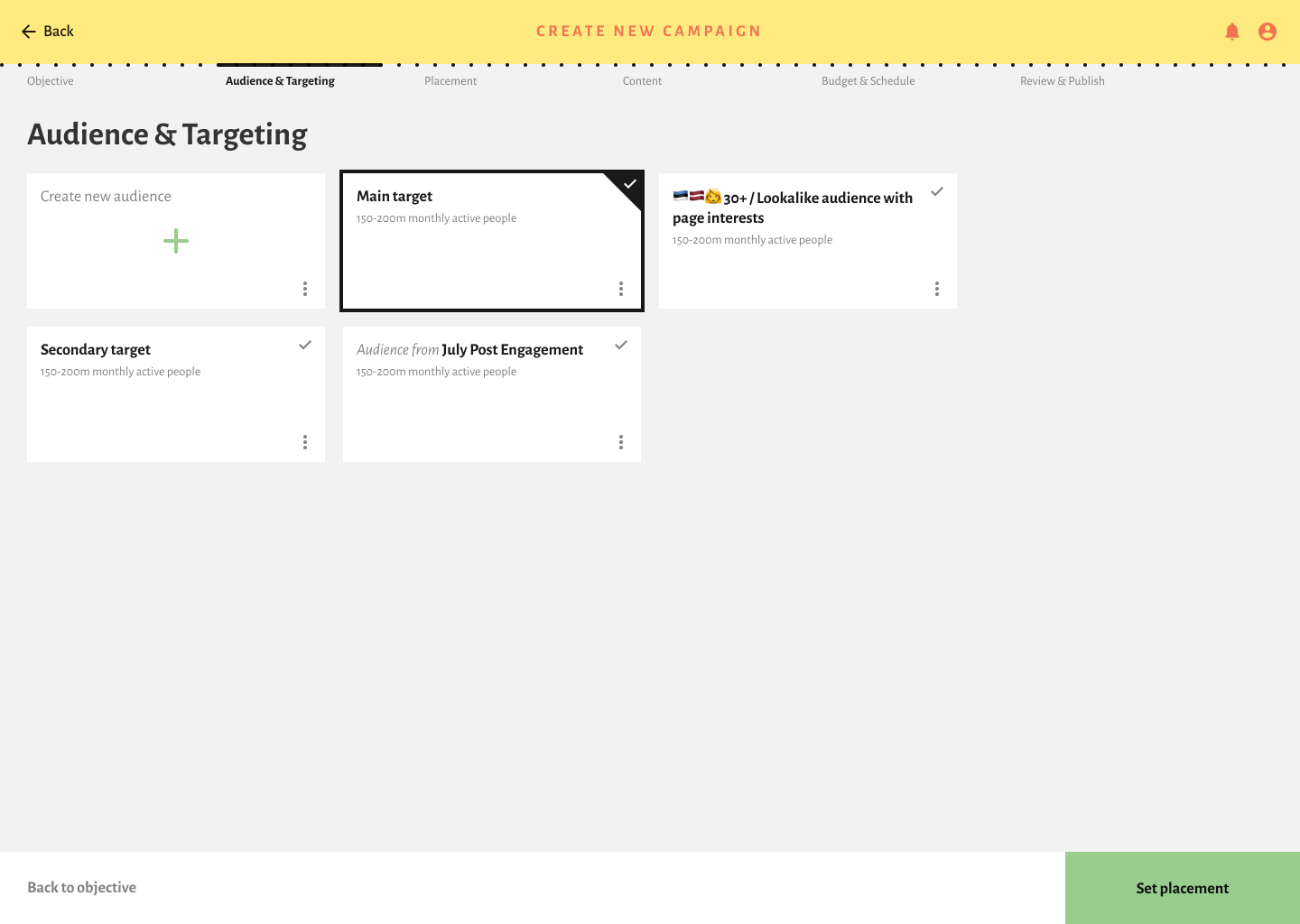
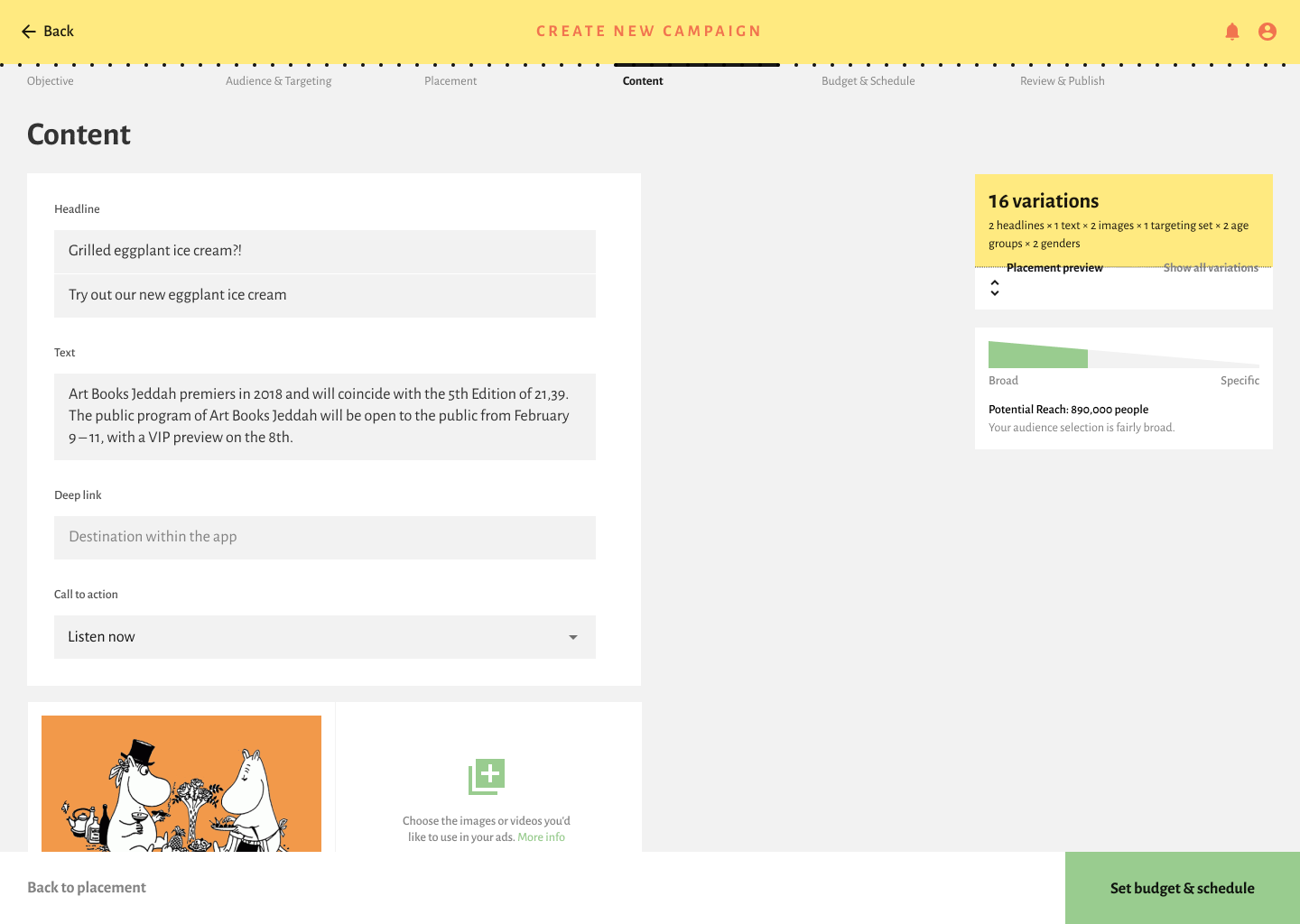
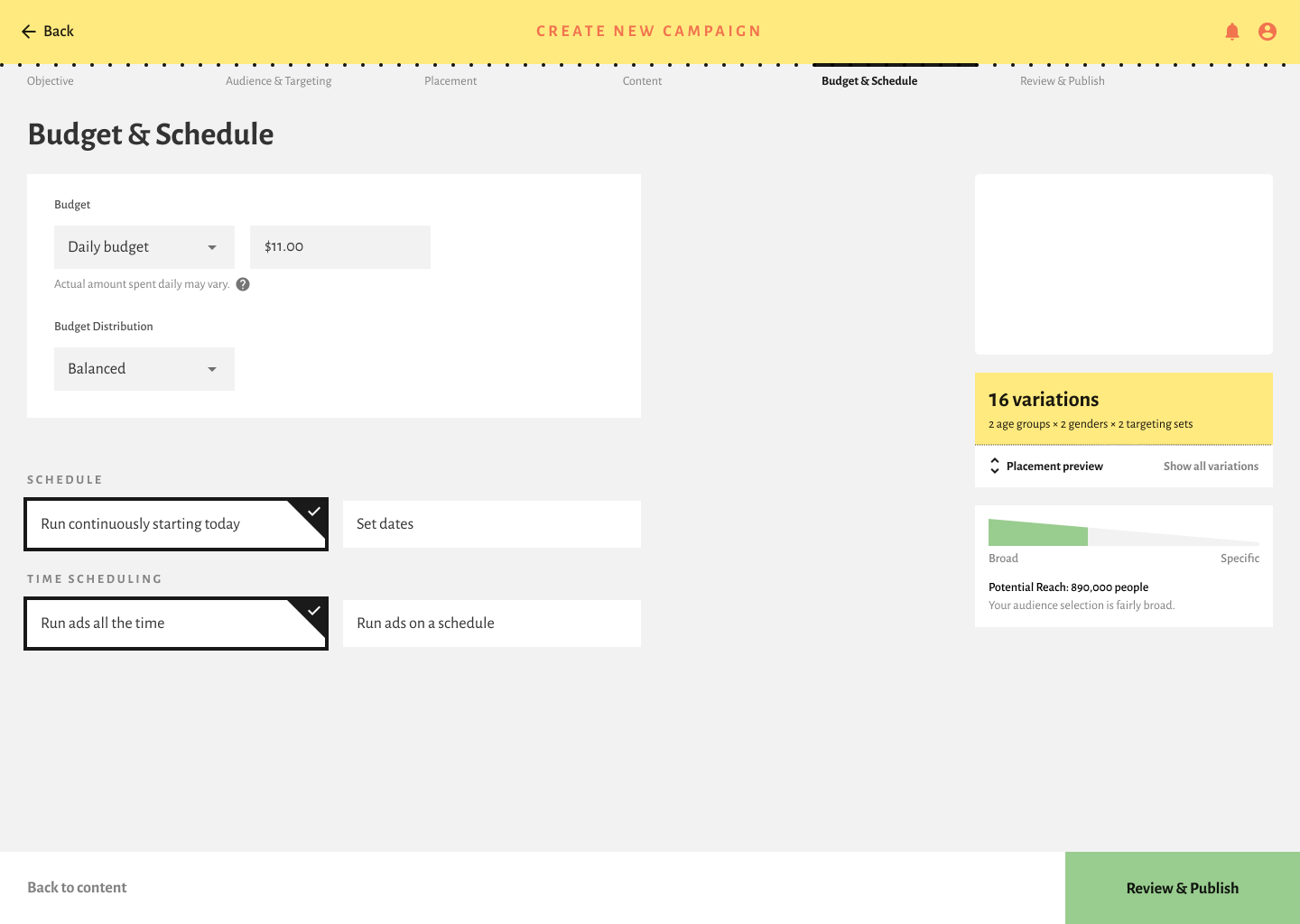
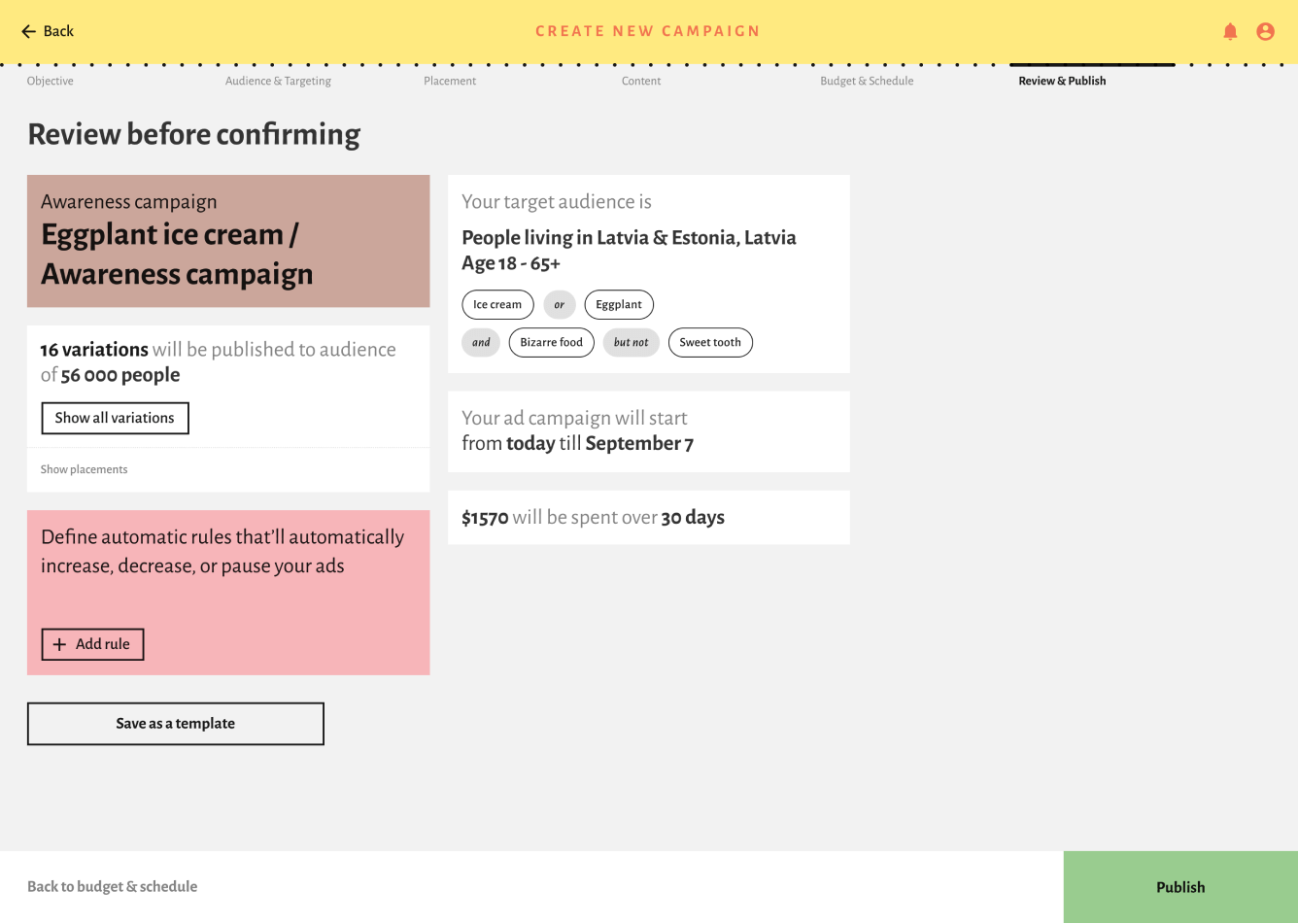
Campaign creation compressed into a guided six-step flow — templates, reusable audiences, automatic format adaptation — so making a campaign costs minutes rather than a lost afternoon.
Know-how built in
Users had access to powerful tools but not the profession behind them. Proven campaign structures and a pre-launch review that catches common mistakes encode the guidance the research showed was missing.
Consistency without vigilance
Create once, adapt per platform automatically — brand voice and formats stay consistent without anyone having to police them.
Learnings
Material Design themability
Material Design's approach to theming offers a surprisingly flexible system for customising visual elements. In this case the focus was on the colour system with bold, distinctive palettes — in service of the warm, playful direction the project called for.